Types Of Construction Hoists And Safety Usage Specifications: Comprehensive Analysis And Purchasing Guide
Construction Hoists: Core Equipment for High-Altitude Operations
In high-altitude operation scenarios such as building construction, bridge maintenance, and exterior wall decoration, construction hoists, as efficient and flexible lifting equipment, play a crucial role in transporting personnel and materials. They not only significantly improve work efficiency but also directly relate to construction safety. However, different types of hoists are suitable for varying scenarios, and incorrect selection or operation may lead to safety risks. This article will detailedly analyze the types of construction hoists, safety usage specifications, and purchasing key points to help construction teams scientifically apply this critical equipment.
I. Definition and Application Fields of Construction Hoists
A
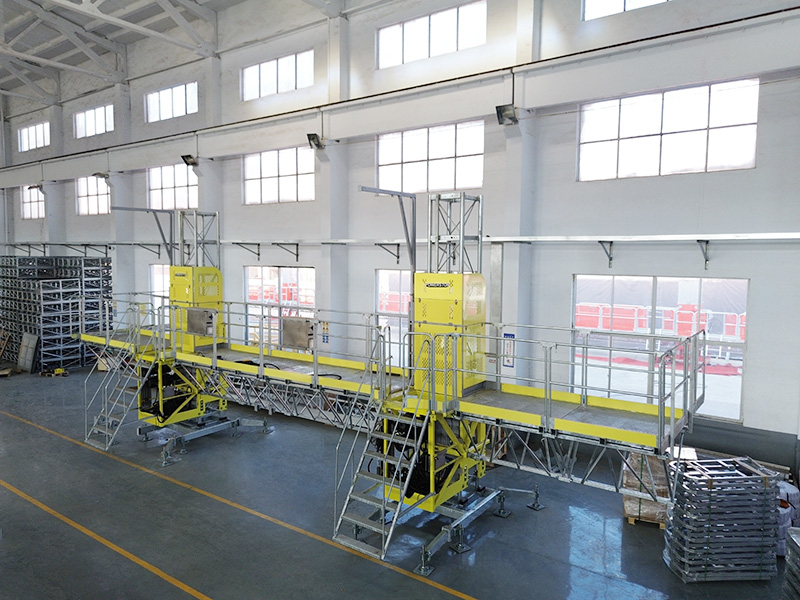
construction hoist is a lifting device fixed to a building or structure via suspension, used to carry personnel, tools, and materials for high-altitude operations. Its design focuses on stability and flexibility, and it is widely used in:
- Construction Engineering: Exterior wall painting, curtain wall installation, door and window construction, etc.;
- Bridges and Overpasses: Pier inspection, bridge deck maintenance;
- High-Altitude Facility Maintenance: Billboard installation, chimney inspection, etc.;
- Large Venue Construction: High-altitude operations for complex structures like stadiums and convention centers.
Understanding its application scenarios helps in more accurately selecting the appropriate hoist type.
II. Main Types of Construction Hoists
Based on power sources, structural designs, and functional differences, construction hoists can be divided into the following categories, each with distinct characteristics and applicable scenarios:
(I) Classification by Power Source: Electric Hoists and Manual Hoists
The power source is a core factor affecting hoist operation efficiency, mainly divided into electric and manual types:
1. Electric Hoists
Electric hoists use an electric motor as power to drive steel cables for platform lifting and lowering, and are currently the most commonly used type in engineering. Their advantages include simple operation, stable lifting speed, and high work efficiency, making them suitable for long-term, high-frequency high-altitude operations such as exterior wall construction of high-rise buildings. In addition, electric hoists have strong load-bearing capacity and can carry multiple workers and tools simultaneously, reducing the number of round trips.
2. Manual Hoists
Manual hoists do not require electric drive and realize platform movement through manual operation of the lifting mechanism, featuring convenient installation and disassembly, no reliance on power sources, and low cost. However, limited by human power, their lifting speed is slow and efficiency is relatively low, making them more suitable for temporary, low-frequency operations such as small building repairs or scenarios where power supply is inconvenient.
(II) Classification by Structure: Support Structure, Braided/Wound/Bound Structure, and Frame Structure
Structural design determines the stability, flexibility, and applicable working conditions of the hoist, mainly divided into the following three categories:
1. Support Structure Hoists
Support structure hoists consist of uprights, crossbeams, load-bearing platforms, and suspension装置, with a solid overall frame and excellent stability. They have strong load-bearing capacity and can adapt to complex operating environments, such as bridge inspection or large-scale building construction with multiple wind directions and high loads, making them the first choice for scenarios with high safety requirements.
2. Braided/Wound/Bound Structure Hoists
This type of hoist combines flexible materials (such as high-strength ropes, braided nets) with a simple frame, featuring a lightweight structure and outstanding flexibility. Due to their light weight and easy disassembly, they are suitable for temporary, short-cycle operations such as small exterior wall repairs and local facility maintenance, but attention should be paid to their limited load-bearing capacity, and overloading is strictly prohibited.
3. Frame Structure Hoists
Frame structure hoists have a metal frame as the main body, with a compact design and strong specificity. Their size and functions can be customized according to specific operation requirements, for example, narrow frames are suitable for operations on narrow wall surfaces (such as elevator shafts) or scenarios with strict restrictions on operating space, such as ancient building restoration.
(III) Classification by Function: High-Altitude Operation Hoists, Material Hoists, and Construction Elevators
Functional positioning determines the core purpose of the hoist, mainly divided into three categories:
1. High-Altitude Operation Hoists
Designed specifically for personnel operations, they have a moderately sized platform equipped with protective railings and safety locks to ensure the safety of operators. Suitable for scenarios requiring personnel to stand and operate, such as exterior wall painting, curtain wall installation, and equipment inspection.
2. Material Hoists
With material transportation as the core function, they have a large platform space and strong load-bearing capacity, and are usually not allowed to carry people (or only allow operators to monitor along with materials). Suitable for vertical transportation of construction materials (such as sand, cement, tools), reducing manual handling costs.
3. Construction Elevators
Mainly used for the up and down movement of construction personnel, with the additional function of transporting a small amount of materials, similar to a "high-altitude elevator". Their design focuses on personnel comfort and safety, equipped with fall prevention devices, suitable for the daily commuting of personnel in high-rise building construction.
III. Construction Hoist Safety Usage Specifications: Ensuring Zero-Risk Operations
High-altitude operations inherently have safety hazards, and the standardized use of hoists is the key to avoiding accidents. The following are safety guidelines that must be strictly followed:
1. Strictly Prohibit Overloading and Reasonably Distribute Loads
Each hoist has a rated load limit, and it is necessary to clearly distinguish between "personnel load" and "material load". Overloading or uneven loading (such as materials stacked concentratedly on one side) is strictly prohibited. Overloading can cause steel cable breakage and structural deformation, leading to falling risks; uneven loading may cause the hoist to tilt and lose balance.
2. Standardize the Wearing of Protective Equipment
Operators must wear safety helmets and safety belts throughout the operation. The safety belt must be fixed to an independent safety rope (not the hoist itself) to form "double protection". In addition, wear anti-slip shoes and protective gloves according to the operating environment to prevent tools from falling and injuring people.
3. Operate Smoothly and Avoid Sudden Stops or Rises
Maintain a uniform speed during lifting and lowering, avoid rapid lifting/lowering or sudden stops to prevent platform shaking and personnel imbalance caused by inertia. In severe weather such as strong winds (usually wind speed exceeding 10.8m/s) and thunderstorms, operations should be stopped immediately, and the hoist should be lowered to the ground and fixed.
4. Pay Attention to the Environment and Avoid Obstacles
Before operation, clear obstacles around the hoist (such as scaffolding, protruding components, wires). During lifting and lowering, constantly observe the upper and side environments to avoid structural damage or platform overturning caused by collisions. Sufficient lighting must be provided for night operations to ensure clear visibility.
5. Regular Inspections and Maintenance of Equipment Performance
Before daily operations, check key components: whether the steel cables have broken wires or wear; whether the safety locks are sensitive; whether the motor (for electric hoists) operates normally; whether the connectors are loose. Conduct a comprehensive overhaul once a week and performance tests by professionals once a month, and promptly replace aging or damaged components.
IV. How to Select the Appropriate Construction Hoist?
Selecting a construction hoist requires considering operation requirements, environmental conditions, and safety standards, and comprehensive judgment can be made from the following dimensions:
- Operation Cycle: Electric hoists are preferred for long-term operations, while manual hoists can be chosen for temporary operations;
- Operation Content: High-altitude operation hoists are selected for personnel operations, and material hoists are chosen for pure material transportation;
- Site Conditions: Frame structures are suitable for narrow spaces, and support structures are suitable for complex environments;
- Safety Priority: For high-risk scenarios (such as high-rise buildings), prioritize electric support structure hoists with anti-fall devices and strong stability.
Conclusion
Construction hoists are "safety partners" for high-altitude operations, and their type selection and standardized use directly relate to construction efficiency and personnel safety. By clarifying the differences in power, structure, and function, selecting the appropriate type according to the operation scenario, and strictly following safety guidelines, we can give full play to the value of hoists and ensure "zero accidents and high efficiency" in every high-altitude operation.