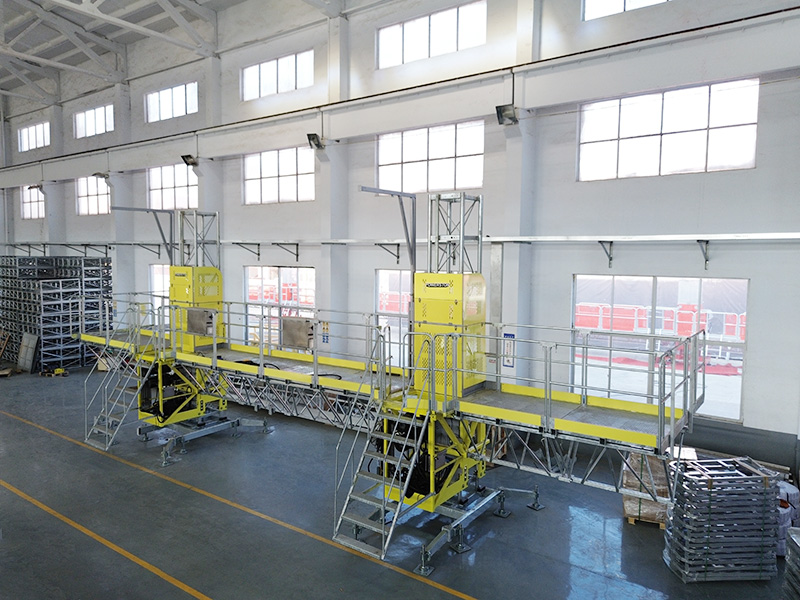
Aerial Work Platform: An Efficient And Safe Solution For High-Altitude Operations
In the field of modern construction and facility maintenance, the demand for high-altitude operations is increasingly common. As a device specifically designed for high-altitude work, the aerial work platform, with its unique advantages, plays an indispensable role in scenarios such as building exterior wall cleaning, curtain wall installation, exterior wall maintenance, and various types of high-altitude inspections. It provides workers with a stable and flexible operating platform, greatly improving the efficiency and safety of high-altitude operations.
Main Application Fields of Aerial Work Platforms
Aerial work platforms have a very wide range of applications, covering almost all scenarios that require high-altitude operations. The most common include:
Building Exterior Wall Cleaning and Sanitization: Whether it is commercial buildings, residential buildings, or public facilities, aerial work platforms can easily reach the exterior walls of each floor, making cleaning work efficient and convenient.
Curtain Wall Installation and Maintenance: During the installation, replacement, and maintenance of glass curtain walls or stone curtain walls, aerial work platforms provide construction workers with precise operating positions.
Exterior Wall Renovation and Maintenance: Including exterior wall painting, thermal insulation layer construction, old wall repair, etc. The platform can adapt to different construction needs.
Other High-Altitude Operations: Such as billboard installation and maintenance, external inspection of large venues, etc. As long as it is high-altitude work that needs to be carried out outside the building, the aerial work platform can provide strong support.
Working Principle of Aerial Work Platforms
Aerial work platforms are mainly suspended from the load-bearing structure at the top of the building by strong steel wire ropes. The working platform is usually made of metal materials to ensure its stability and load-bearing capacity. Operators inside the platform can drive the platform to move smoothly up and down along the building's exterior facade through a dedicated lifting control system, thereby reaching the required height and position for the corresponding construction operations. This design allows the working range to be flexibly adjusted to meet the needs of different work points.
Core Advantages of Aerial Work Platforms
The choice of aerial work platforms for operations mainly benefits from their following significant characteristics and advantages:
1. Simple Structure and Easy Operation: Compared with traditional scaffolding, the aerial work platform has a more compact structure, is relatively simple to install and disassemble, and the technical requirements for operators are easier to master.
2. Flexible Movement and Precise Positioning: The platform can be flexibly raised and lowered and moved horizontally to a small extent, enabling it to accurately reach the designated working position and reducing unnecessary movement time.
3. Strong Adaptability and Wide Application: Aerial work platforms can demonstrate good adaptability to building facades of different heights and shapes.
4. Improved Work Efficiency: Fast lifting and precise positioning significantly increase the workload per unit time, thereby shortening the overall construction period.
5. Reduced Construction Risks: It provides a relatively enclosed and stable operating space for workers. Compared with suspended operations, it can effectively reduce safety risks such as falls and ensure the personal safety of construction workers.
Safety Precautions for High-Altitude Operations
Although aerial work platforms have many advantages, safety is always the primary prerequisite for high-altitude operations. When using aerial work platforms, the following safety precautions must be strictly observed:
Operator Qualifications: Operators must receive professional training, obtain corresponding qualifications, and be familiar with the equipment's operating procedures and safety regulations.
Equipment Inspection: Before each use, conduct a comprehensive and detailed inspection of all components of the platform, including steel wire ropes, suspension mechanisms, braking systems, safety locks, etc., to ensure the equipment is in good working condition.
Load Control: Overloading is strictly prohibited. Ensure that the total weight of personnel and materials on the working platform does not exceed the rated load of the platform.
Avoidance of Severe Weather: In severe weather conditions such as strong winds, heavy rain, and thunderstorms, aerial work platform operations should be stopped, and the platform should be properly parked.
Safety Protection: Operators must wear personal protective equipment such as safety helmets and safety belts as required. The safety belt should be effectively fixed to an independent safety life rope.
Regular Maintenance: In accordance with the requirements of the equipment manual, conduct regular maintenance on the platform to promptly identify and eliminate potential faults.
Summary
As an efficient, flexible, and safe high-altitude operation equipment, the aerial work platform has become an indispensable important tool in the field of modern building construction and maintenance. It can not only significantly improve work efficiency but also provide solid safety guarantees for high-altitude workers. When selecting and using aerial work platforms, fully understanding their performance characteristics and strictly abiding by safety operating procedures are the keys to ensuring the smooth and safe progress of operations. If you need to learn more about the application of aerial work platforms in specific scenarios or more specific safety operation specifications, further professional consultation will provide you with more targeted guidance.