How To Choose A Lift Platform Truck? Comprehensive Analysis Of Specifications, Types And Usage Guide
As an efficient and safe aerial work equipment, lift platform trucks play an indispensable role in many fields such as modern construction, municipal engineering renovation, industrial production and maintenance. They can smoothly and safely transport workers and tools to designated heights, significantly improving work efficiency and reducing the risks of aerial operations. Faced with a wide range of lift platform truck products on the market, how to choose the most suitable equipment for one's own needs has become a problem for many users. This article will detail the common specifications, main types, purchasing points and usage precautions of lift platform trucks to help you fully understand and make an informed decision.
I. Understanding the Key Specification Parameters of Lift Platform Trucks
When purchasing a lift platform truck, it is first necessary to clarify the core specification parameters of the equipment, which directly relate to whether it can meet specific operational needs.
1. Load Capacity: This is one of the most basic and important parameters of a lift platform truck, referring to the maximum weight that the platform can safely carry, usually in kilograms (KG). When choosing, full consideration must be given to the total weight of the operator's body weight as well as all items such as tools and materials carried, ensuring that it does not exceed the rated load of the equipment to ensure operational safety.
2. Lifting Height: That is, the maximum working height that the platform can reach. According to different operating scenarios, common standard lifting heights are 6 meters, 8 meters, 10 meters, 12 meters, 16 meters, 20 meters, etc. For users with special height requirements, some manufacturers also provide customized services to meet personalized aerial work requirements.
3. Platform Size: Refers to the length and width of the working platform. Sufficient platform size is the basis to ensure that operators can operate comfortably and place tools and materials safely. When choosing, the adequacy of the platform space should be comprehensively judged based on the expected number of operators and the size of the required tools.
4. Special Environment Adaptability: For some special working environments, such as flammable and explosive places or humid and corrosive environments, it is necessary to choose lift platform trucks with corresponding protective capabilities. For example, explosion-proof lift platform trucks are suitable for dangerous places with combustible gases or dust, while platform trucks made of stainless steel are more resistant to moisture and corrosion, extending the service life of the equipment.
II. Main Types of Lift Platform Trucks and Their Application Scenarios
There are various types of lift platform trucks, each with its own unique structural characteristics and scope of application. Choosing the right type is key to ensuring efficient completion of operations.
1. Scissor Aerial Work Platform: This is a widely used type, characterized by excellent stability, traction and certain climbing ability. The scissor structure makes the platform more stable during lifting, suitable for various indoor and outdoor work scenarios on flat ground or with slight slopes, such as factory maintenance, warehouse inventory management, shopping mall decoration, etc.
2. Trailer-Mounted Aerial Work Platform: Such platform trucks usually need to be towed by other vehicles, with the advantages of flexibility and a wide working range. It is suitable for operation scenarios that require frequent transfer between different work locations, such as outdoor advertising installation, street lamp maintenance, large venue construction and other temporary or mobile aerial work.
3. Articulating Boom Aerial Work Platform: Known for its unique multi-section folding arm design, it can provide excellent multi-directional positioning function and obstacle-crossing ability. Articulating boom platforms can easily reach complex work areas that are difficult to access by conventional platforms, such as complex structures of building facades, top maintenance of large equipment, etc., especially suitable for work environments with limited space or obstacles.
4. Telescopic Boom Aerial Work Platform: Compared with articulating boom type, telescopic boom platform trucks usually have a longer extension distance and greater lifting capacity. Its operation is relatively simple, with a large working radius, and can transport operators and tools to farther and higher positions. It is widely used in large industrial facility construction, bridge inspection, airport terminal maintenance and other aerial work scenarios that require a large range.
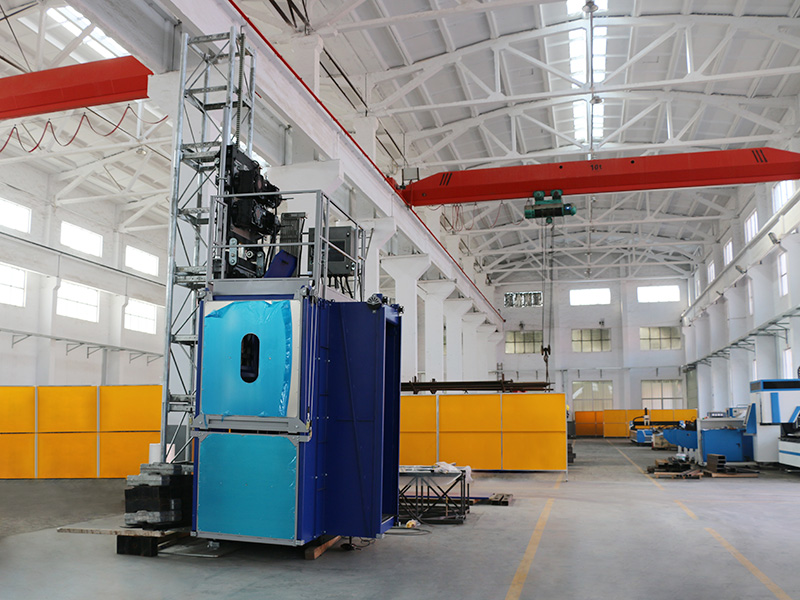
5. Mast Aerial Work Platform: Relatively lightweight and compact in structure, usually single or double mast design, easy to operate and transport. Mast platform trucks have low requirements for operating space and are very suitable for general maintenance, installation and cargo access operations in small indoor spaces or warehousing and logistics fields.
6. Special Demand Application Platform Truck: In addition to the above common types, there are also some lift platform trucks designed to meet specific industries or special operation needs on the market. For example, super heavy-duty telescopic boom aerial work platforms can meet the needs of heavy equipment installation or material handling; while environmentally friendly aerial work platforms (such as electric drive) pay more attention to energy conservation and emission reduction, suitable for indoor or environmentally sensitive areas with high requirements for noise and emission standards.
III. Purchase Suggestions for Lift Platform Trucks
Purchasing a lift platform truck is an important investment decision that requires comprehensive consideration of multiple factors to ensure the selection of a cost-effective equipment that meets actual needs.
1. Clarify Operational Needs: Before purchasing, it is necessary to clearly define one's own operational needs, including the required maximum lifting height, load capacity, operating environment (indoor/outdoor, ground conditions, presence of obstacles), operating frequency and whether frequent movement is required. Only by clarifying these core needs can the selection range be narrowed down to find the most matching product.
2. Choose Reputable Brands: Priority should be given to brands with good market reputation and large production scale. Such brands usually have better guarantees in product research and development, manufacturing process, quality control and after-sales service, and can provide users with more reliable equipment and timely technical support, reducing subsequent use risks.
3. On-Site Inspection and Test Drive: If conditions permit, it is recommended to conduct an on-site inspection at the manufacturer or authorized dealer to personally check the workmanship and materials of the equipment. For large or key equipment, it is best to conduct an on-site test drive or operation demonstration to personally experience the performance, operational convenience and comfort of the equipment.
4. Understand After-Sales Service in Detail: A sound after-sales service system is crucial. Understand the warranty period provided by the manufacturer, maintenance response time, parts supply and whether operation training is provided, etc. These are directly related to the long-term stable operation and use cost of the equipment.
5. Carefully Verify Upon Receipt: After the equipment arrives, do not rush to put it into use. First, carefully check whether the accompanying technical materials (such as user manual, certificate of conformity, warranty card, etc.), accessories and tools are complete. At the same time, conduct a comprehensive appearance inspection of the equipment itself to check for damage caused during transportation or manufacturing defects, ensuring that the equipment is intact.
IV. Safety Use and Maintenance Guide for Lift Platform Trucks
Correct use and regular maintenance are the core links to ensure the safe and efficient operation of lift platform trucks and extend their service life.
1. Strictly Abide by Safety Operating Procedures: Operators must receive professional training before going on duty, fully understand the performance characteristics of the equipment they operate, carefully read the user manual, and be familiar with and strictly abide by all safety rules and operating guidelines. Unauthorized operation or violation of operating procedures is strictly prohibited.
2. Comprehensive Inspection Before Operation: Before each use, the equipment must be carefully inspected. Including but not limited to: whether the tire pressure is normal, whether the hydraulic system has leaks, whether all connecting parts are tight, whether the control handles and braking devices are sensitive and reliable, whether the safety protection devices (such as guardrails, safety belts) are intact and effective, etc.
3. Pay Attention to Operational Environment Safety: Before starting work, the working environment needs to be evaluated. Ensure that the ground in the work area is solid and flat without collapse risk; pay attention to surrounding dangerous factors such as high-voltage lines and obstacles and maintain a safe distance; stop outdoor aerial work in severe weather conditions (such as strong wind, heavy rain, thunder and lightning).
4. Standardize the Operation Process: During operation, the control handle should be operated smoothly to avoid sudden lifting and lowering. Personnel and items on the platform must not be overloaded or unbalanced. Operators must fasten their seat belts on the platform and are strictly prohibited from playing or engaging in behaviors unrelated to work on the platform. When moving the platform, the platform should be lowered to the lowest position.
5. Regular Professional Maintenance: In accordance with the requirements of the equipment user manual, formulate and strictly implement a regular maintenance plan. Regularly check and replace hydraulic oil and lubricating oil, clean or replace air filters, inspect electrical systems, etc. Timely detect and eliminate potential faults to ensure that the equipment is always in good working condition.
6. Master Emergency Handling Measures: Operators and relevant management personnel must be familiar with the emergency handling plans and measures of the equipment. Understand how to safely evacuate personnel and perform emergency descent operations in case of sudden failures (such as platform unable to lift, hydraulic system failure) or unexpected situations, ensuring that in case of accidents, responses can be made quickly and correctly to minimize losses.