Types And Purchasing Guide For Material Lifting Equipment: Enhancing Operational Efficiency And Safety
Material lifting equipment is a core tool in industrial production, construction, warehousing and logistics, and other fields. By lifting various materials or equipment, they effectively reduce manual labor intensity, improve operational efficiency, and provide safety guarantees for the transfer of high-altitude and heavy materials. Different types of lifting equipment, due to differences in structural design and performance characteristics, are suitable for diverse scenario requirements. This article will detail common types of material lifting equipment and summarize key purchasing factors to help you select appropriate equipment based on actual needs.
Common Types of Material Lifting Equipment
1. Cranes
Cranes are the "main models" in lifting equipment. With strong lifting capacity and stability, they are widely used in lifting scenarios for medium and large materials. Common types include:
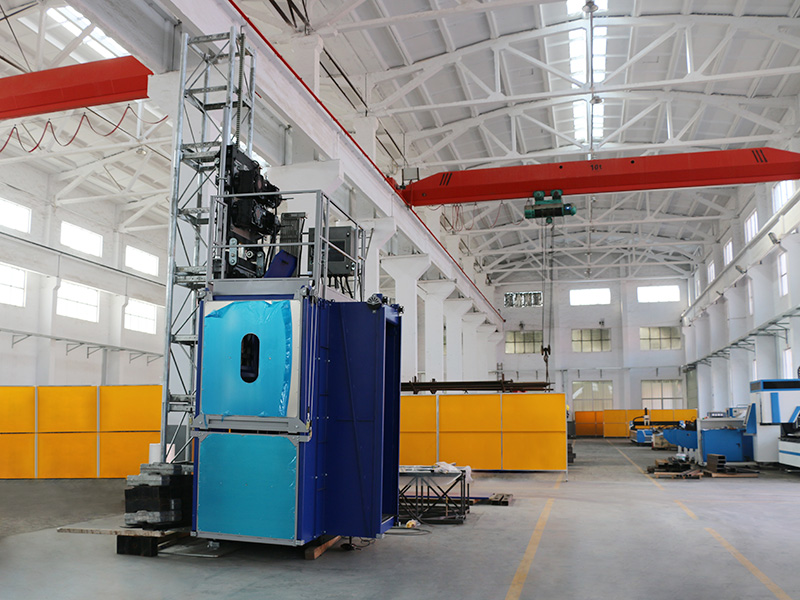
- Overhead Cranes: Suitable for indoor spaces such as factories and warehouses, they move horizontally via rails and efficiently perform tasks like equipment installation and cargo transfer within workshops;
- Gantry Cranes: With a "gate" shaped structure, they are mostly used in open yards, ports, or large construction sites. They can move long distances along ground rails and are suitable for lifting long materials or batch goods;
- Tower Cranes: Common in high-rise building construction, they feature high height and wide coverage, meeting the needs of vertical and horizontal transportation of high-altitude materials.
2. Mobile Cranes
Mobile cranes are carrier-based on automobile chassis. Their biggest advantage is mobility and flexibility, allowing them to drive to the work site without fixed rails, especially suitable for scenarios requiring frequent relocation. They are usually equipped with hydraulic telescopic booms or steel structure booms, which can flexibly adjust the boom length according to material weight and height, playing an important role in outdoor mobile operations such as road construction, wind power equipment installation, and building emergency rescue.
3. Crawler Cranes
The core characteristics of crawler cranes are strong lifting capacity and adaptability to complex terrain. Traveling on crawler chassis, they have a large ground contact area and strong grip, enabling stable driving and lifting even in muddy, rough construction sites or field environments. Their ultra-large rated lifting capacity makes them the first choice for heavy-duty tasks such as lifting large equipment (e.g., generator sets, chemical reactors) and bridge construction.
4. Hoists
Hoists are suitable for lifting medium and small weight materials, with the advantages of small size, simple installation, and flexible use. They are divided into manual and electric types:
- Manual Hoists: Rely on human operation, suitable for scenarios without power supply, light weight, or occasional use (e.g., temporary lifting in small warehouses);
- Electric Hoists: Driven by electricity, they are more efficient and suitable for frequent operations in workshop assembly lines and small warehouses. They can be used with rails to realize horizontal or vertical movement of materials.
In addition, winches also belong to the hoist category, commonly used for material traction or short-distance lifting.
5. Rigging
Rigging is the "key accessory" directly connecting materials. It needs to be used with shackles, hooks, lifting rings, etc., to ensure stable materials during lifting. Common types include:
- Synthetic Fiber Slings: Soft in texture, they will not damage the material surface and are suitable for precision equipment or fragile materials;
- Wire Ropes: High strength and wear-resistant, suitable for lifting in heavy-duty or harsh environments;
- Lifting Chains: Sturdy in structure and good in impact resistance, they are commonly used in heavy-duty scenarios such as metallurgy and mining. Choosing suitable rigging is the basis for ensuring lifting safety.
6. Other Specialized Lifting Equipment
For special scenario requirements, there are also some specialized equipment:
- Mast Systems: Supported by masts, suitable for narrow spaces or places without large equipment;
- Cable Cranes: Using cables to cross obstacles, suitable for material transportation in terrain such as canyons and mountainous areas;
- Hydraulic Lifting Equipment: Achieving stable lifting through hydraulic power, commonly used for the integral installation of large components.
Key Factors in Purchasing Material Lifting Equipment
When selecting
lifting equipment, it is necessary to comprehensively consider the following factors based on actual needs to ensure equipment adaptability and operational safety:
1. Material Weight and Size
This is the primary basis for selection. Material weight directly determines the rated lifting capacity of the equipment (overloading may cause equipment damage or accidents, while underloading leads to resource waste); size (length, width, height) needs to match the equipment's operating radius and space—for example, long and narrow materials are suitable for the long-distance movement of gantry cranes, while ultra-high materials require the height advantage of tower cranes.
2. Working Environment
The operating environment has clear restrictions on equipment types:
- Indoor Scenarios (e.g., factories, warehouses): Priority is given to fixed or small equipment such as overhead cranes and electric hoists to avoid occupying too much space;
- Outdoor/Complex Terrain (e.g., construction sites, mountainous areas): Mobile cranes (flexible relocation) and crawler cranes (adapting to rough terrain) are more suitable;
- High-Altitude Operations (e.g., high-rise buildings): Tower cranes or hydraulic lifting equipment are preferred.
3. Operator Skills
Lifting equipment operation is professional, and different equipment have different skill requirements: large equipment (e.g., cranes, tower cranes) require operators to hold special operation certificates and be familiar with operating specifications and emergency handling; although manual hoists are simple, basic training is also required to avoid operational errors. When purchasing, it is necessary to consider the existing skill level of the team or plan training in advance.
4. Cost Budget
Equipment costs include purchase/lease fees and subsequent maintenance costs:
- Long-term, high-frequency heavy-duty operations: Consider purchasing cranes, crawler cranes, etc., which have higher cost performance for long-term use;
- Short-term, light-weight needs: Leasing mobile cranes, hoists, etc., is more economical, reducing idle waste. It is necessary to balance performance and cost within the budget to avoid excessive investment or insufficient performance.